Fine Line Tattoo: The Complete Guide to Minimalist Ink, Longevity, Healing & Choosing the Right Artist
Fine Line Tattoo has become one of the fastest-growing tattoo styles in the world. What was once considered a niche technique favored by a handful of specialist artists has evolved into one of the most requested tattoo styles among people of all ages. From delicate botanical illustrations and elegant script tattoos to intricate portraits and meaningful symbols, Fine Line Tattoo represents a new era of tattoo artistry—one that values precision, subtlety, and timeless design over bold, heavy outlines.
Whether you’re planning your very first tattoo or expanding an existing collection, understanding what makes a Fine Line Tattoo unique is essential before making your decision. While these tattoos appear simple at first glance, they require an exceptional level of technical skill, artistic experience, and thoughtful design planning to ensure they heal beautifully and continue looking great for years to come.

At Tattoo Station Hoi An, we’ve welcomed clients from around the world who choose Vietnam not only for its rich culture and beautiful landscapes but also for the opportunity to receive world-class tattoos during their travels. Fine Line Tattoo has become one of our signature specialties because it perfectly reflects the growing demand for elegant, meaningful, and highly personalized artwork.
This comprehensive guide will walk you through everything you need to know—from the origins of Fine Line Tattoo and how it differs from other tattoo styles to healing, longevity, placement, aftercare, and choosing the right tattoo artist. By the end of this article, you’ll have the knowledge to make an informed decision and ensure your tattoo remains a piece you’ll be proud to wear for a lifetime.
Table of Contents
- What Is a Fine Line Tattoo?
- The History of Fine Line Tattoo
- Why Fine Line Tattoos Have Become So Popular
- Fine Line Tattoo vs Traditional Tattoo
- Fine Line Tattoo vs Single Needle Tattoo
- Characteristics of a High-Quality Fine Line Tattoo
- Popular Fine Line Tattoo Ideas
- Best Body Placements
- Does a Fine Line Tattoo Hurt?
- How Long Do Fine Line Tattoos Last?
- Do Fine Line Tattoos Fade Faster?
- Healing Process
- Aftercare Guide
- Common Mistakes to Avoid
- Choosing the Right Tattoo Artist
- Why Tattoo Station Hoi An?
- Frequently Asked Questions
What Is a Fine Line Tattoo?
A Fine Line Tattoo is a tattoo style defined by its exceptionally thin, clean, and precise lines. Instead of relying on thick outlines, heavy black fills, or bold shading, Fine Line tattoos focus on delicate linework to create elegant and highly detailed artwork.
The style is often associated with minimalism, but that doesn’t mean Fine Line tattoos are limited to small or simple designs. In fact, some of the world’s most impressive botanical sleeves, realistic animal portraits, architectural illustrations, and ornamental tattoos are created using Fine Line techniques.
What distinguishes this style isn’t necessarily the subject matter—it’s the precision of the execution. Every line must be intentional, evenly saturated, and perfectly placed. Because there is very little room for error, Fine Line Tattoo is widely considered one of the most technically demanding tattoo styles in the industry.
Unlike traditional tattoos that use bold outlines to maintain visibility over time, Fine Line designs rely on balanced spacing, thoughtful composition, and expert application to ensure they age gracefully. When executed correctly, these tattoos can remain elegant for decades while maintaining their refined appearance.
The Evolution of Fine Line Tattoo
Tattooing has existed for thousands of years, with evidence of body art dating back to ancient Egypt, Polynesia, Japan, and Indigenous cultures across the globe. Historically, tattoos served purposes far beyond decoration—they symbolized identity, spirituality, protection, social status, and cultural heritage.
Traditional tattoo styles evolved around bold outlines for a practical reason. Early tattoo pigments and equipment made thick, highly saturated designs more durable over time. Heavy outlines helped tattoos remain recognizable even after decades of natural aging.
The development of modern tattoo machines, improved pigments, and advanced needle configurations changed everything.
Artists gradually gained the ability to create finer details than ever before.
During the late twentieth century, a new generation of tattoo artists began experimenting with smaller needle groupings and increasingly refined techniques. This movement laid the foundation for what we now know as Fine Line Tattoo.
As social media platforms such as Instagram transformed how tattoo artists shared their work, Fine Line Tattoo rapidly gained international attention. The clean aesthetic appealed to people who previously considered tattoos too bold or overwhelming.
Today, Fine Line Tattoo has become one of the defining styles of contemporary tattooing, embraced by artists and collectors around the world.
Why Fine Line Tattoo Has Become a Global Trend
Several factors have contributed to the explosive popularity of Fine Line Tattoo over the past decade.
Minimalism Has Influenced Modern Design
Modern architecture, fashion, interior design, and graphic design all share one common movement: minimalism.
People increasingly appreciate clean aesthetics, intentional simplicity, and designs that communicate meaning without unnecessary complexity.
Fine Line Tattoo reflects these same principles.
Rather than covering large areas of skin with heavy ink, it celebrates restraint, balance, and negative space.
This subtle approach appeals to professionals, travelers, creatives, and anyone seeking body art that complements rather than dominates their appearance.
Social Media Changed Everything
Platforms like Instagram, Pinterest, TikTok, and Behance have transformed tattoo culture.
High-resolution photography allows artists to showcase incredibly detailed Fine Line work that may have been impossible to appreciate in print magazines just twenty years ago.
Millions of people now discover tattoo inspiration through carefully curated online portfolios.
Delicate floral compositions, elegant script tattoos, celestial illustrations, and miniature wildlife designs consistently rank among the most shared tattoo images worldwide.
As visual trends continue to evolve, Fine Line Tattoo remains one of the most searched tattoo styles on Google because it balances artistic sophistication with everyday wearability.
More People Are Choosing Tattoos Later in Life
Another major reason behind the growth of Fine Line Tattoo is the changing demographic of tattoo clients.
Tattoos are no longer associated only with specific subcultures.
Today, clients include:
- Business professionals
- Doctors
- Architects
- Designers
- Entrepreneurs
- Teachers
- Parents
- Retirees
- International travelers
Many of these clients prefer elegant, understated tattoos that hold personal meaning without drawing excessive attention.
Fine Line Tattoo offers exactly that.
Its refined appearance makes it suitable for almost every lifestyle while allowing unlimited creative expression.
Fine Line Tattoo vs Traditional Tattoo
Although both styles create permanent artwork, they differ dramatically in appearance, technique, and artistic philosophy.
Traditional Tattoo
Traditional tattoos are known for:
- Bold black outlines
- Heavy color saturation
- Thick line weights
- High contrast
- Strong visual impact
These tattoos are intentionally designed to remain highly visible over decades of aging.
Classic American Traditional and Japanese Traditional tattoos are excellent examples of this philosophy.
Fine Line Tattoo
Fine Line Tattoo focuses instead on:
- Ultra-thin linework
- Elegant proportions
- Soft visual balance
- Minimal shading
- Clean compositions
- High levels of detail
Rather than emphasizing boldness, Fine Line Tattoo emphasizes precision and refinement.
Neither approach is objectively better—they simply serve different artistic goals.
Choosing between them depends entirely on your personal taste, lifestyle, and the story you want your tattoo to tell.
Fine Line Tattoo vs Single Needle Tattoo
One of the biggest misconceptions in tattooing is that Fine Line Tattoo and Single Needle Tattoo are the same thing.
While they are closely related, they are not identical.
A Single Needle Tattoo refers to the equipment being used. As the name suggests, the artist creates the tattoo using a single tattoo needle, allowing for extraordinary precision and extremely delicate details.
A Fine Line Tattoo, on the other hand, describes the overall artistic style rather than the specific equipment.
Many Fine Line tattoos are created using single needles, but professional artists may also use very small liner needle groupings—such as 3RL or 5RL—depending on the design, skin type, and desired longevity.
The goal is not simply to produce the thinnest possible line. Instead, experienced artists select the needle configuration that provides the best balance between visual elegance and long-term durability.
Understanding this distinction is important because the quality of a Fine Line Tattoo depends far more on the artist’s technique and design expertise than on whether a single needle is used.
Why Artist Experience Matters More Than Equipment
Many first-time clients assume that buying better tattoo machines or using smaller needles automatically results in superior Fine Line tattoos.
In reality, the opposite is often true.
Professional tattoo artists spend years developing the hand control necessary to produce consistently smooth, evenly saturated lines without damaging the skin.
Creating perfect Fine Line work requires mastery of:
- Needle depth
- Hand speed
- Machine voltage
- Skin tension
- Ink flow
- Line consistency
- Anatomical placement
- Long-term tattoo aging
Even a tiny inconsistency—barely visible during the tattoo session—can become noticeable after healing.
This is why Fine Line Tattoo remains one of the highest-skilled disciplines in contemporary tattooing.
When choosing a tattoo studio, always prioritize the artist’s healed portfolio, reputation, and experience over equipment alone.
In the next section, we’ll explore the defining characteristics of a truly exceptional Fine Line Tattoo and how to recognize quality craftsmanship before booking your appointment.
Characteristics of a High-Quality Fine Line Tattoo
Not all Fine Line Tattoos are created equally. While social media is filled with stunning fresh tattoos, the true measure of quality is how a tattoo looks after it has fully healed and aged over time.
A professionally executed Fine Line Tattoo should remain clean, balanced, and readable for years. Although all tattoos naturally soften with age, excellent craftsmanship ensures that the design continues to look intentional rather than blurred.
Here are the key characteristics of a high-quality Fine Line Tattoo.
Clean, Consistent Linework
Every line should appear smooth from beginning to end without noticeable wobbling or uneven thickness.
Experienced artists understand how to maintain consistent needle depth and hand speed throughout the tattoo. This produces crisp, elegant lines that heal evenly and retain their shape over time.
Uneven linework is often one of the first signs of an inexperienced artist.
Balanced Design
One of the biggest mistakes in Fine Line Tattoo design is placing delicate elements too close together.
As tattoos naturally age, ink spreads slightly beneath the skin. If the design lacks sufficient spacing, tiny details may gradually merge together.
Professional tattoo artists carefully plan:
- Line spacing
- Negative space
- Visual balance
- Long-term readability
The goal is not only to create a beautiful tattoo today but also one that continues to look beautiful years later.
Proper Ink Saturation
A Fine Line Tattoo should never appear patchy after healing.
Although the lines are thin, they should still have consistent ink saturation throughout the design.
Overworking the skin can lead to scarring, while tattooing too lightly may result in uneven fading.
Finding the perfect balance requires years of practical experience.
Thoughtful Placement
Body anatomy plays a major role in the success of Fine Line Tattoo.
Areas with smoother skin generally preserve fine details better than highly mobile areas.
A skilled artist considers:
- Muscle movement
- Skin texture
- Sun exposure
- Daily friction
- Natural body contours
Instead of simply placing the tattoo where requested, experienced artists often recommend slight adjustments that improve both aesthetics and longevity.
Popular Fine Line Tattoo Ideas
One of the greatest strengths of Fine Line Tattoo is its incredible versatility.
Whether you prefer minimalist artwork or highly detailed illustrations, this style can be adapted to almost any concept.
Here are some of the most popular Fine Line Tattoo ideas.
Botanical Tattoos
Flowers remain among the most requested Fine Line designs worldwide.
Popular choices include:
- Roses
- Lavender
- Cherry blossoms
- Lotus flowers
- Olive branches
- Wildflowers
- Fern leaves
- Eucalyptus
Botanical tattoos symbolize beauty, growth, resilience, and personal transformation.
Because plants naturally feature delicate structures, they perfectly complement Fine Line techniques.
Script and Lettering
Simple words often carry powerful meaning.
Many clients choose:
- Family names
- Inspirational quotes
- Coordinates
- Wedding dates
- Children’s handwriting
- Personal signatures
Elegant script tattoos are timeless and deeply personal.
Choosing the right font and spacing is essential to ensure long-term readability.
Animal Tattoos
Fine Line techniques allow artists to create remarkably detailed wildlife illustrations.
Popular choices include:
- Wolves
- Lions
- Birds
- Butterflies
- Elephants
- Foxes
- Cats
- Dogs
Many animal tattoos symbolize personality traits such as courage, freedom, wisdom, loyalty, or resilience.
Celestial Designs
Minimalist celestial tattoos continue to grow in popularity.
Common themes include:
- Moon phases
- Stars
- Constellations
- Planets
- Solar systems
- Eclipse designs
These tattoos often represent guidance, mystery, hope, or life’s journey.
Architecture and Travel
At Tattoo Station Hoi An, many international travelers choose Fine Line tattoos inspired by their journeys.
Popular travel-inspired designs include:
- Ancient temples
- Traditional Vietnamese lanterns
- Japanese torii gates
- Mountain landscapes
- Ocean waves
- Historic buildings
- City skylines
- Compass illustrations
These tattoos transform travel memories into lifelong artwork.
Minimal Portrait Tattoos
Advances in Fine Line Tattoo techniques now allow artists to create remarkably detailed portraits using delicate linework.
Clients often request portraits of:
- Family members
- Children
- Pets
- Loved ones
- Cultural icons
Portrait tattoos require exceptional artistic ability and should only be entrusted to experienced specialists.
Best Placement for Fine Line Tattoos
Choosing the right placement is just as important as choosing the design.
The location of your tattoo affects:
- Healing
- Visibility
- Comfort
- Aging
- Future maintenance
Some areas naturally preserve fine details better than others.
Forearm
The forearm is widely considered one of the best locations for Fine Line Tattoo.
Benefits include:
- Smooth skin
- Low friction
- Excellent visibility
- Comfortable healing
- Long-lasting detail
It works well for both small minimalist tattoos and larger compositions.
Upper Arm
The upper arm offers plenty of space while remaining relatively protected from sunlight and everyday wear.
It is an excellent choice for:
- Botanical sleeves
- Large floral pieces
- Animal illustrations
- Decorative compositions
Shoulder
The shoulder provides a naturally curved canvas that complements many Fine Line designs.
Its stable skin makes it ideal for intricate artwork requiring long-term precision.
Back
The back offers one of the largest uninterrupted canvases on the body.
Artists can create expansive Fine Line compositions featuring:
- Botanical arrangements
- Landscape scenes
- Sacred geometry
- Ornamental designs
Because the back experiences relatively little friction, tattoos often heal exceptionally well.
Rib Cage
Although more sensitive during the tattoo session, the rib cage produces stunning Fine Line tattoos.
Many clients choose elegant floral branches or meaningful script that follows the natural curves of the body.
Areas That May Require Future Touch-Ups
Some body parts naturally experience more movement, friction, and skin regeneration.
Examples include:
- Fingers
- Hands
- Feet
- Toes
- Palms
Fine Line Tattoos placed in these locations may soften more quickly and occasionally require touch-ups to maintain their appearance.
This doesn’t mean these areas should be avoided—it simply means clients should understand the maintenance involved.
Does a Fine Line Tattoo Hurt?
Pain is one of the most common concerns for first-time tattoo clients.
The truth is that pain depends far more on placement than tattoo style.
Fine Line Tattoo itself is not necessarily less painful than traditional tattooing.
However, many Fine Line projects involve:
- Smaller designs
- Less shading
- Shorter sessions
These factors often make the overall experience feel more manageable.
Pain levels also vary significantly from person to person.
Areas with thinner skin or more nerve endings—such as ribs, ankles, fingers, and the spine—tend to feel more sensitive.
In contrast, areas with more muscle or fat, including the upper arm, thigh, and outer forearm, are generally more comfortable.
Most clients describe the sensation as a continuous scratching or vibration rather than sharp pain.
Staying hydrated, eating a proper meal before your appointment, and getting enough rest can all contribute to a more comfortable tattoo experience.
How Long Do Fine Line Tattoos Last?
Perhaps the biggest misconception surrounding Fine Line Tattoo is that it fades quickly.
In reality, every tattoo changes over time, regardless of style.
The difference lies in how well the tattoo has been designed and applied.
A professionally executed Fine Line Tattoo can remain beautiful for decades when supported by proper placement, quality pigments, and consistent aftercare.
Several factors influence longevity:
- The artist’s technical skill
- Design size and spacing
- Skin type
- Sun exposure
- Daily friction
- Overall health
- Aftercare routine
Fine Line Tattoos naturally become slightly softer as the years pass.
This subtle evolution is normal and should not be mistaken for poor quality.
Professional artists design with this aging process in mind, ensuring that lines have enough breathing room to remain distinct over the long term.
The next section of this guide explores healing, fading, and aftercare in greater detail, helping you understand how to protect your Fine Line Tattoo from day one.
Do Fine Line Tattoos Fade Faster?
One of the most common myths about Fine Line Tattoo is that they disappear after only a few years. While it’s true that Fine Line Tattoos age differently from bold traditional tattoos, they are not temporary when designed and applied correctly.
Every tattoo changes over time. As your skin naturally regenerates and ages, tattoo pigment softens beneath the surface. This process affects all tattoo styles—not just Fine Line.
The difference is that delicate linework makes these natural changes more noticeable. Because the lines are thinner, they require careful planning from the very beginning.
Factors That Affect Tattoo Longevity
Several factors determine how well your Fine Line Tattoo ages:
1. Artist Experience
The most important factor is the skill of your tattoo artist.
Experienced artists understand:
- Proper needle depth
- Ink saturation
- Skin anatomy
- Design spacing
- Long-term aging
Choosing an experienced Fine Line specialist dramatically increases the longevity of your tattoo.
2. Tattoo Placement
Some areas naturally preserve tattoos better than others.
Excellent placements include:
- Forearm
- Upper arm
- Shoulder
- Back
- Thigh
- Calf
Areas that experience frequent movement or friction—such as fingers, palms, and feet—may require occasional touch-ups.
3. Sun Exposure
Ultraviolet (UV) light is one of the biggest causes of tattoo fading.
After your tattoo has fully healed:
- Wear sunscreen (SPF 30 or higher)
- Avoid prolonged sun exposure
- Cover your tattoo when possible
Protecting your tattoo from the sun is one of the easiest ways to maintain crisp linework for years.
4. Skin Type
Every person’s skin is unique.
Factors such as:
- Oil production
- Elasticity
- Hydration
- Lifestyle
- Age
all influence how tattoos heal and age.
5. Daily Lifestyle
Athletes, surfers, swimmers, and people who work outdoors often expose their tattoos to more friction and sunlight.
This doesn’t mean Fine Line Tattoo isn’t suitable—it simply means proper maintenance becomes even more important.
Fine Line Tattoo Healing Process
Healing begins the moment your tattoo session ends.
Understanding each stage helps reduce anxiety and ensures the best possible result.
Days 1–3
During the first few days you may notice:
- Mild redness
- Slight swelling
- Tender skin
- Plasma or excess ink
These reactions are completely normal.
Your tattoo is essentially a controlled skin wound and needs time to recover.
Days 4–10
The tattoo begins forming thin protective scabs.
At this stage:
- The tattoo may look dull.
- It may begin to itch.
- Light peeling is expected.
Never scratch or pick your tattoo.
Removing peeling skin prematurely can affect healing and damage fine details.
Weeks 2–4
Most external healing is complete.
Your tattoo begins looking:
- Cleaner
- Brighter
- More defined
However, deeper layers of skin continue healing beneath the surface.
Months 1–3
This is when your tattoo reaches its true healed appearance.
Fine details become clearer, and the skin returns to its normal texture.
Professional artists typically recommend waiting at least 8–12 weeks before evaluating whether a touch-up is necessary.
Fine Line Tattoo Aftercare
Proper aftercare is just as important as the tattoo itself.
Even the most skilled artist cannot compensate for poor healing habits.
Immediately After Your Appointment
Follow your artist’s instructions carefully.
Most studios recommend:
- Leaving the protective bandage on for the recommended time.
- Washing the tattoo gently with fragrance-free soap.
- Patting it dry with a clean towel.
- Applying a thin layer of recommended tattoo moisturizer.
During Healing
For the first few weeks:
✓ Keep the tattoo clean.
✓ Moisturize regularly.
✓ Wear loose clothing.
✓ Drink plenty of water.
✓ Get enough sleep.
Avoid:
✗ Swimming pools
✗ Ocean water
✗ Hot tubs
✗ Saunas
✗ Direct sunlight
✗ Heavy scratching
✗ Tight clothing that rubs against the tattoo
Long-Term Care
Once your tattoo has fully healed:
- Apply sunscreen whenever exposed to sunlight.
- Keep your skin moisturized.
- Maintain a healthy skincare routine.
Healthy skin helps tattoos remain vibrant for many years.
Common Mistakes to Avoid
Many tattoo problems can be prevented by avoiding a few common mistakes.
Choosing Price Over Quality
A Fine Line Tattoo may last a lifetime.
Choosing the cheapest studio instead of the most experienced artist often leads to disappointing results.
Remember:
Good tattoos aren’t cheap. Cheap tattoos rarely stay good.
Choosing Designs That Are Too Small
Tiny tattoos filled with microscopic details may look incredible immediately after the appointment.
Years later, however, those details may become difficult to distinguish.
Professional artists often recommend making a design slightly larger to improve long-term readability.
Ignoring Aftercare
Skipping moisturizer.
Swimming too early.
Picking scabs.
Excessive sun exposure.
These habits significantly increase the risk of poor healing.
Copying Internet Tattoos
Every person’s body is different.
A tattoo that looks beautiful on someone else’s arm may not suit your anatomy.
Custom-designed tattoos always create better long-term results.
How to Choose the Right Fine Line Tattoo Artist
Selecting the right tattoo artist is the single most important decision you’ll make.
Before booking your appointment, ask yourself these questions.
Does the Artist Specialize in Fine Line Tattoo?
Tattooing is like any other art form.
An artist who excels at Japanese sleeves may not necessarily specialize in Fine Line work.
Look for artists who consistently produce clean, delicate linework.
Can You See Healed Tattoos?
Fresh tattoos always look impressive.
Healed tattoos reveal the artist’s true skill.
Ask to see work that has healed for six months or longer.
Does the Studio Follow Strict Hygiene Standards?
Professional tattoo studios should always use:
- Single-use needles
- Sterile equipment
- Medical-grade disinfectants
- Barrier protection
- Licensed artists
Your health is just as important as the final artwork.
Communication Matters
A great tattoo artist doesn’t simply copy ideas.
They listen.
They ask questions.
They explain the design process.
They recommend improvements.
Excellent communication leads to better tattoos.
Why Choose Tattoo Station Hoi An?
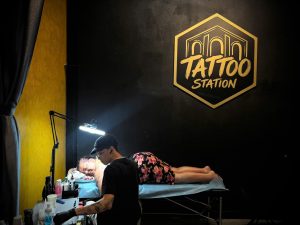
Located in the heart of the UNESCO World Heritage town of Hoi An, Tattoo Station Hoi An has earned a reputation for delivering premium-quality tattoos in a welcoming and professional environment.
Our clients come from across Europe, Australia, North America, and Asia, trusting us to transform their ideas into meaningful, lasting works of art.
What Sets Us Apart?
- Experienced Fine Line specialists
- Custom-designed artwork for every client
- International hygiene and safety standards
- High-quality inks and professional equipment
- Personalized consultations
- Honest advice about tattoo longevity and placement
- English-speaking artists and staff
- A relaxed, friendly atmosphere for international travelers
We believe every tattoo should be unique. Instead of relying on generic flash designs, we work closely with each client to create artwork that reflects their story, personality, and vision.
Whether you’re visiting Hoi An for a few days or planning your next tattoo journey, our goal is to provide an experience that is as memorable as the tattoo itself.
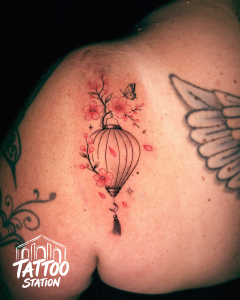
A Tattoo That Captures the Spirit of Hoi An
For many travelers, a tattoo is more than a beautiful design—it becomes a permanent reminder of a meaningful journey.
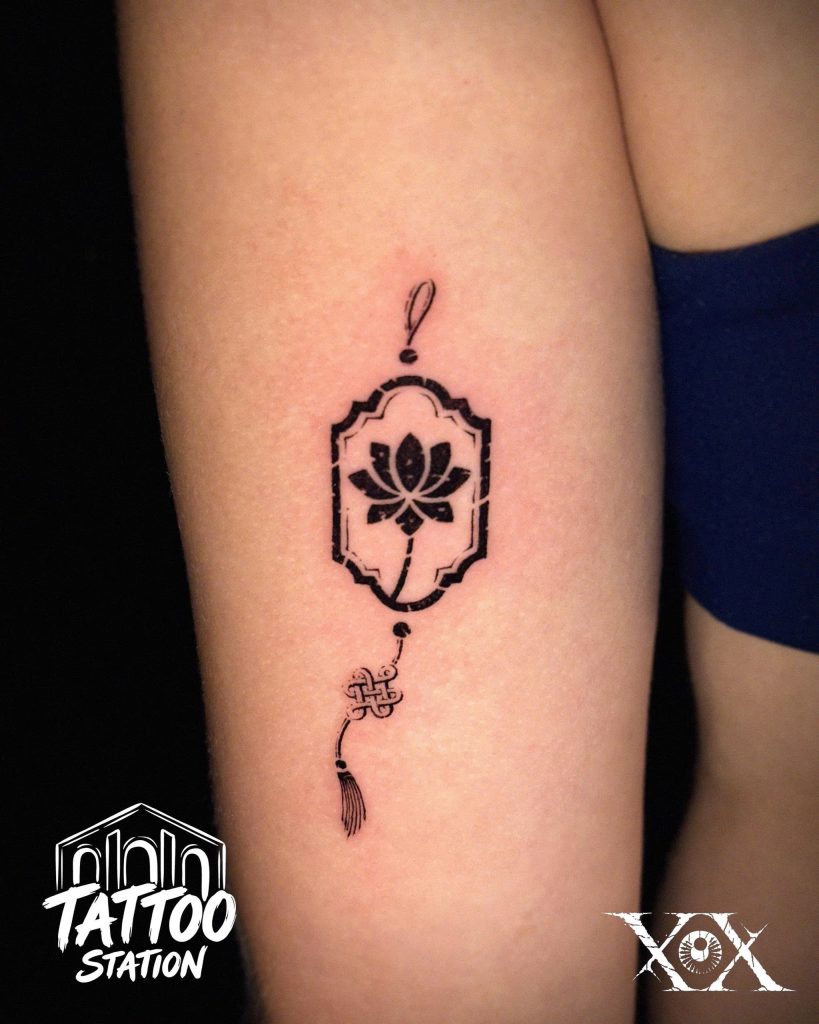
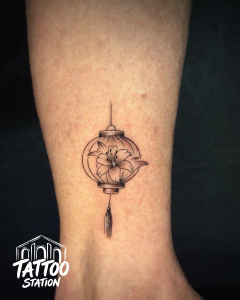
One of the most requested custom concepts at Tattoo Station Hoi An combines the city’s famous lanterns with botanical elements such as cherry blossoms, lotus flowers, or lilies. These designs celebrate the unique atmosphere of Hoi An while embracing the minimalist elegance that defines Fine Line Tattoo.
In this piece, the lantern serves as the central element, representing the timeless beauty of Hoi An’s Ancient Town. Delicate cherry blossoms extend naturally from the top and side of the lantern, while a butterfly introduces a sense of movement and transformation. Rather than relying on bold outlines or heavy shading, the design uses fine, controlled linework and soft gradients to create depth without sacrificing its minimalist aesthetic.
This balance between cultural storytelling and refined craftsmanship is one of the reasons Fine Line Tattoo has become so popular among international travelers visiting Vietnam.
Final Thoughts
Fine Line Tattoo is more than just a trend—it’s a celebration of precision, simplicity, and meaningful design.
Its clean aesthetic makes it one of the most versatile tattoo styles available today, suitable for first-time clients and experienced collectors alike.
However, achieving a beautiful Fine Line Tattoo requires more than choosing an attractive design. It depends on selecting the right artist, planning a design that will age gracefully, following proper aftercare, and understanding how tattoos naturally evolve over time.
When all of these elements come together, a Fine Line Tattoo becomes more than body art—it becomes a lasting expression of your personal story.
At Tattoo Station Hoi An, we’re passionate about helping clients create timeless tattoos they’ll be proud to wear for the rest of their lives.
Frequently Asked Questions (FAQ)
Are Fine Line Tattoos good for first-time tattoo clients?
Yes. Their elegant appearance and minimalist style make them one of the most popular choices for first-time tattoo enthusiasts.
Do Fine Line Tattoos hurt more?
Pain depends primarily on tattoo placement and individual pain tolerance rather than tattoo style.
How long do Fine Line Tattoos last?
With professional application, proper placement, and good aftercare, Fine Line Tattoos can remain beautiful for decades.
Will I need a touch-up?
Some tattoos—especially very small designs or those on fingers and hands—may benefit from a touch-up after several years.
Can Fine Line Tattoos include shading?
Absolutely. Many Fine Line Tattoos incorporate soft black and grey shading to add depth while preserving a minimalist appearance.
Are Fine Line Tattoos suitable for large projects?
Yes. Although commonly associated with small tattoos, Fine Line techniques are also ideal for sleeves, back pieces, botanical compositions, ornamental designs, and highly detailed custom artwork.
Ready to Get Your Fine Line Tattoo in Hoi An?
If you’re looking for a custom Fine Line Tattoo in Vietnam, our team at Tattoo Station Hoi An is here to help.
From your first consultation to the final healed result, we’re committed to creating artwork that combines precision, creativity, and lasting quality.
Book your consultation today and let us turn your ideas into timeless art.